Things I’m Doing in My 2nd Trimester as a Pelvic Floor PT Who Is Also 23 Weeks Pregnant
As a pelvic floor physical therapist, I spend a lot of my time helping women understand how their bodies change during pregnancy and postpartum. So naturally, being pregnant myself has given me a whole new perspective on what it feels like to actually live through these changes.
I’m currently 23 weeks pregnant, and I have to say, the second trimester has felt very different from the first.
For me, it honestly felt like a switch flipped when I entered my second trimester. During the first trimester, I was extremely tired, nauseous, and low energy. I tried to maintain my normal exercise routine, but there were definitely days when I needed to take a rest day or cut a workout short. I was going to bed earlier than my daughter, and even drinking enough water felt like a chore.
Now? My energy is significantly better, the nausea is gone, and I feel much more like myself.
That doesn't mean I'm pushing through everything exactly as I did before pregnancy. I'm still listening to my body and making modifications when I need to. But I've been pleasantly surprised by how much of my normal routine I can maintain.
Here are some of the things I'm focusing on during my second trimester.
1. I'm continuing to strength train 4 days a week
Strength training has remained one of my biggest priorities during pregnancy.
I'm currently lifting approximately the same weights I was lifting before pregnancy and generally taking my sets to within about 2–3 reps of failure. My goal isn't to set personal records or continually increase my weight. Instead, I'm focused on maintaining strength, moving well, and continuing to challenge my muscles appropriately.
One thing I am paying more attention to is breathing during exercise.
During the exertion or “work” portion of an exercise, I'm using a pursed-lip exhale rather than holding my breath or bearing down. This helps me coordinate my breathing with my abdominal wall and pelvic floor rather than unnecessarily increasing pressure through my trunk.
I'm also giving myself a little more rest when an exercise feels particularly systemically fatiguing. Pregnancy itself is demanding on your cardiovascular and respiratory systems, so sometimes I simply need an extra minute before the next set.
And that's okay!
Pregnancy isn't the time to prove how little rest you need.
2. I'm getting about 150 minutes of light-to-moderate cardio each week
I'm aiming for approximately 150 minutes of light-to-moderate cardiovascular activity each week, but I'm keeping this flexible.
Right now, my cardio is a combination of:
Walking
Hiking
Dance cardio
I haven't been a runner historically, so I'm not suddenly using pregnancy as the time to train for a 5K. Your pregnancy exercise routine does not need to look like someone else's!
I'm also paying attention to how different movements feel as my belly grows.
For example, higher-impact movements like jumping jacks aren't always particularly comfortable right now. If they're included in a workout, I'll simply modify them to a lower-impact option.
This is an important distinction: modifying an exercise doesn't mean you're doing less or “failing” at your workout. It means you're adapting the movement to the body you have today.
3. I'm paying attention to my pelvic floor, not just doing Kegels
As a pelvic floor PT, I obviously think about my pelvic floor a lot. But one of the biggest misconceptions about pelvic floor health is that pregnancy means you should automatically start doing hundreds of Kegels.
That's not what I'm doing. Instead I'm focusing much more on movement coordination: being able to contract, relax, breathe, move, and manage pressure through my entire trunk and pelvic floor.
Your pelvic floor isn't working in isolation. It works with your diaphragm, abdominal wall, spinal muscles, hips, and pelvis as part of your larger pressure-management system.
So rather than thinking, “How can I make my pelvic floor stronger?”, I'm thinking:
Can I contract when I need to? Can I relax when I need to? Can I coordinate it with my breathing and movement?
Those are skills that can be useful throughout pregnancy, exercise, and eventually labor and postpartum recovery.
4. I'm intentionally working my hip adductors and hip flexors
There are a couple of muscle groups I'm giving a little more attention to than I typically would: my hip adductors (aka my inner thighs) and hip flexors.
Both groups have attachments and relationships with the pelvis, and maintaining good strength and coordination around the pelvis can be particularly helpful as the demands on the pelvis change during pregnancy.
This doesn't mean that weak hip adductors or hip flexors automatically cause pelvic pain. Pelvic pain during pregnancy is multifactorial and often times, these muscles are playing a part.
5. I'm practicing my deep core connection throughout the day
I'm also intentionally practicing activating my transverse abdominis and deeper abdominal system in different positions throughout the day.
This isn't about walking around with my abs sucked in all day. Instead, I'm practicing finding that gentle deep-core engagement while breathing normally and allowing my abdominal wall to expand and move.
As pregnancy progresses, your abdominal wall changes dramatically. Your abdominal muscles lengthen to accommodate the growing uterus, and the way you manage pressure through your trunk changes along with it.
Practicing coordination now gives me an opportunity to become familiar with how my core feels and functions as my body continues to change. This can also be helpful for things like posture, low-back support, and preparing for the demands of labor.
6. I'm doing diaphragmatic breathing every day
Breathing exercises are another daily practice for me.
Specifically, I'm working on diaphragmatic breathing in different positions rather than only practicing it lying on my back.
One of my favorite positions right now is child's pose. I feel like I can really expand into my back and side ribs in this position, which gives me a different sensation than breathing while being upright.
I don't think breathing exercises need to be complicated or take 20 minutes. Sometimes I'm simply taking a few slow breaths while I'm already on the floor doing something else. We always say “sprinkle them in” whenever you think about them…could be while sitting at a red light or standing while your lunch is warming up.
The goal is to make breathing and pressure management happy automatically during your day, not another item on a never-ending pregnancy to-do list.
7. I'm working on hip mobility…most days
Ideally, I'd like to work on hip mobility every day.
Realistically? Life happens.
Some nights I'm helping my daughter get ready for bed. Sometimes I'm answering work emails. And sometimes I just want to sit on the couch and do absolutely nothing before bed.
So instead of setting an unrealistic expectation of every single day, I'm aiming for about 4 days a week.
I've found easy opportunities to sneak it in throughout the day. If my daughter is practicing her reading or getting ready for bed, I'll get down on the floor and spend a couple of minutes moving through some hip mobility exercises.
It doesn't have to be a 30-minute mobility session. A few minutes of intentional movement still counts. Like I tell patients all of the time, anything is better then nothing!
8. I'm being mindful of my posture but I'm not trying to have “perfect” posture
As pregnancy progresses, an increased anterior pelvic tilt can naturally occur as your center of mass shifts and your belly grows.
I'm not trying to prevent my body from adapting. Instead, I'm trying to avoid hanging out at the absolute end range of my posture all day.
One cue I've been using is to imagine that I have a high ponytail and someone is gently pulling me upward from the crown of my head. I think about lengthening through my spine, gently bringing my pelvis toward a more neutral position, and allowing my abdomen to support me without aggressively gripping my abs or tucking my pelvis.
The goal isn't:
“Sit perfectly straight all day.”
It's:
“Change positions, move often, and check in with my body.”
That's a much more realistic and sustainable goal.
9. I'm prioritizing fiber and hydration
I'm also paying more attention to the basics: water and fiber.
Constipation is common during pregnancy, and pregnancy itself can create additional pressure and changes throughout the pelvic and abdominal systems. I'm trying to make sure I'm eating enough fiber throughout the day and drinking enough water to support regular bowel movements.
Why does this matter for pelvic floor health? Because consistently straining with bowel movements isn't something I want to add to the load my pelvic floor is already managing. I'm not trying to create a “perfect” pregnancy diet. I'm simply trying to consistently give my body the nutrients, fluids, and fuel it needs.
10. I'm adding a couple of small snacks rather than dramatically changing my diet
I'm aiming for roughly 300 additional calories per day during my second trimester, although individual needs can vary significantly during pregnancy.
Interestingly, I haven't noticed a huge increase in hunger. Instead of forcing myself to eat significantly larger meals, I've added a small late-morning snack and a small afternoon snack.
This has been an easy way for me to add some additional nutrition without feeling like I'm eating enormous meals.
Again, pregnancy nutrition isn't one-size-fits-all. Your calorie and nutrient needs can vary based on your body, activity level, pregnancy, and medical history, so this is simply what has been working for me.
11. I'm paying attention to how my body responds to supine exercise
One question I get frequently is whether you can exercise on your back during pregnancy.
The answer isn't as simple as “never lie on your back.”
I'm currently still incorporating some supine exercises, but I'm paying attention to how I feel. If I experience symptoms such as dizziness, shortness of breath, cramping, or feeling unwell, I'll change positions. Trust me, your body will tell you when you need to reposition.
So far, I haven't experienced those symptoms but as my belly continues to grow, I may choose to elevate myself on a bench for exercises like chest presses or skull crushers that I currently perform on the floor.
The important piece is not blindly following a rule, it's paying attention to your symptoms and following the guidance of your own prenatal care team.
12. I'm not training the same muscle groups on back-to-back days
This is something I was doing before pregnancy and have continued throughout pregnancy.
I'm giving my muscles time to recover rather than intentionally training the same muscle group hard on consecutive days.
Pregnancy doesn't mean you have to completely overhaul your exercise program if you're already active and your pregnancy is uncomplicated. In many cases, you can continue doing many of the activities you were doing before pregnancy, with adjustments as needed.
The key is adapting not stopping.
13. I'm working on sleep before I desperately need better sleep
I've never been a naturally great sleeper, so I'm trying to be proactive about my sleep habits.
I've started my bedtime routine about 15–30 minutes earlier than I normally would and am trying to give myself more time to wind down before getting into bed.
I'm also a side sleeper, and I've started putting a regular pillow between my knees to help with SI joint and back discomfort.
So far, I haven't needed a pregnancy pillow. And honestly, if a regular pillow between your knees is comfortable and works for you, you don't necessarily need to buy the giant pregnancy pillow taking up half your bed.
Most importantly: I'm trying not to turn pregnancy into a giant checklist
This might actually be the biggest thing I'm doing. As a pelvic floor PT, I know a lot of things that I could be doing. I could be doing more mobility. More breathing. More strength work. More walking. More stretching. More labor preparation.
But I'm also pregnant, working, parenting, and trying to have a life. So I'm focusing on the things that feel most valuable and sustainable for me right now.
I'm not trying to “prevent” every possible pregnancy symptom.
I'm not trying to maintain my pre-pregnancy body.
And I'm definitely not trying to prove that pregnancy hasn't changed anything.
My body is changing and that's the point. My goal is to stay strong, mobile, comfortable, and connected to my body while giving myself permission to adapt when something no longer feels good.
And perhaps most importantly, I'm trying to practice what I tell my patients every day:
Listen to your body. Give it what it needs. And remember that taking a modification isn't a step backward, it's part of moving forward.
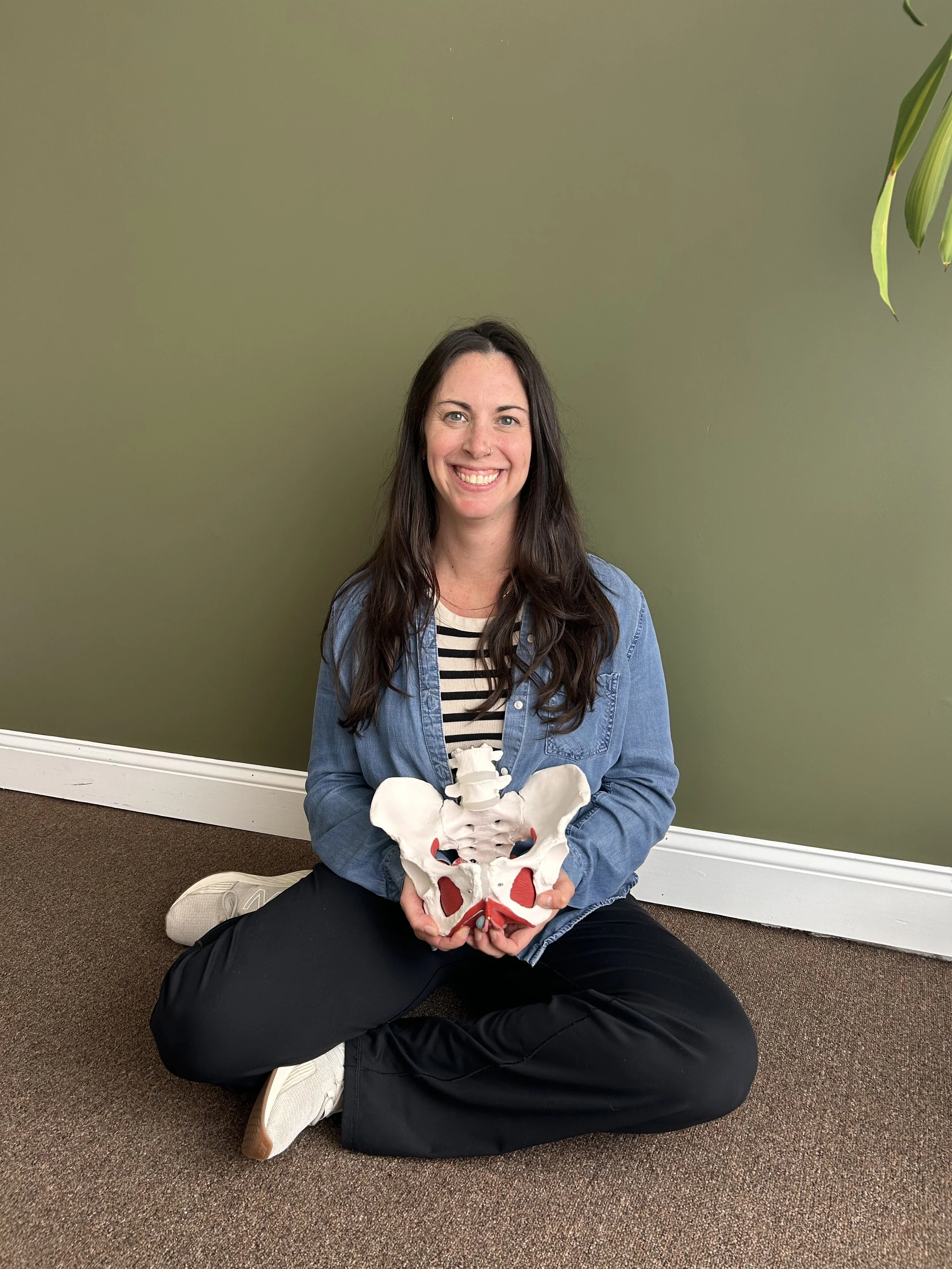
Dr. Sarah O’Hara
Doctor of Physical Therapy, Certified Pregnancy and Postpartum Corrective Exercise Specialist